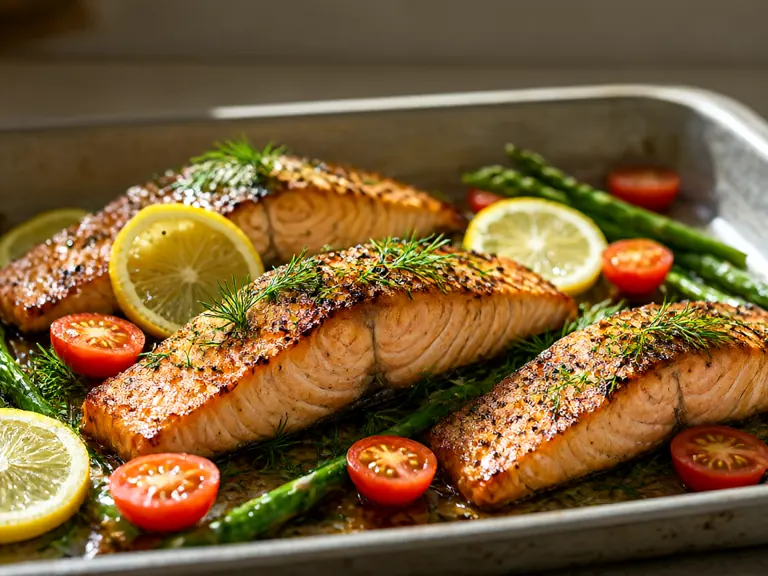
Low carb oven baked salmon recipes are easiest when the fish, vegetables, and seasoning finish together on one tray. This version uses four salmon fillets, lemon, dill, asparagus, and a small amount of cherry tomato for color. The fish roasts at 400°F until it flakes easily, while a quick broil creates lightly browned edges. You will also find a low carb one pan salmon variation, an Instant Pot note, practical substitutions, storage guidance, and a nutrition estimate.
The base recipe serves four and takes about 10 minutes to assemble plus 12 to 16 minutes in the oven, depending on fillet thickness. Each serving is approximately 410 calories, 36 g protein, 26 g fat, and 7 g net carbohydrates with the listed vegetables. Check your own salmon and vegetable labels if you track carbohydrates closely. For more appliance methods, start with the air fryer, slow cooker, and Instant Pot keto recipe hub.
Ingredients for Baked Salmon
- 4 salmon fillets, 5 to 6 ounces each, skin-on or skinless
- 1 tablespoon olive oil, plus 1 teaspoon for the vegetables
- 1 teaspoon kosher salt and 1/2 teaspoon black pepper
- 1 teaspoon garlic powder
- 1 teaspoon dried dill, or 1 tablespoon chopped fresh dill
- 1 lemon, half sliced and half reserved for juice
- 1 pound asparagus, woody ends trimmed
- 1 cup cherry tomatoes, halved
- 2 garlic cloves, finely minced
- 1 tablespoon chopped parsley, to finish
- Optional: 2 tablespoons grated Parmesan or 1 tablespoon capers
Choose fillets with similar thickness so they cook at the same rate. If using frozen salmon, thaw it completely in the refrigerator and pat it very dry. Moisture on the surface prevents the seasoning from adhering and can make the vegetables steam instead of roast. Avoid sweet glazes unless you have checked the added sugar and carbohydrate amount.
How to Bake Salmon and Vegetables
- Heat the oven. Set the oven to 400°F. Line a large rimmed sheet pan with parchment or foil for easier cleanup. If the salmon fillets are very thick, let them sit at room temperature for 10 minutes while the oven heats.
- Season the vegetables. Toss the asparagus and tomatoes with 1 teaspoon olive oil, half the salt, the minced garlic, and a pinch of pepper. Spread them across the pan, leaving a clear space for the salmon.
- Prepare the fish. Pat the salmon dry. Brush the tops with olive oil, then sprinkle with the remaining salt, pepper, garlic powder, and dill. Place lemon slices on top or around the fillets. Put the salmon skin-side down if the skin is attached.
- Roast. Bake for 12 to 16 minutes. Start checking at 12 minutes for thinner pieces. The thickest part should reach 145°F, and the flesh should separate into moist flakes when pressed with a fork. Do not rely on color alone because salmon varieties differ.
- Finish. If you want more color, broil for 60 to 90 seconds while watching closely. Remove the pan, squeeze lemon juice over the fish and vegetables, and add parsley, capers, or Parmesan.
Rest the salmon for two minutes before serving. A short rest lets the juices settle without carrying the fillets into an overcooked texture. If the vegetables are still firm when the fish is done, transfer the salmon to plates and return the vegetables to the oven for 3 to 5 minutes.
Low Carb One Pan Salmon Variation
For low carb one pan salmon recipes with more sauce, whisk 2 tablespoons olive oil, 1 tablespoon lemon juice, 1 teaspoon Dijon mustard, 1 teaspoon dried dill, and 1 tablespoon water. Spoon the mixture over the fish and vegetables before baking. Add sliced zucchini or mushrooms in place of some asparagus, but cut zucchini into thick half-moons so it does not disappear. For a richer finish, add 2 tablespoons softened butter to the sauce after the pan comes out of the oven.
Another option is to place the salmon on a bed of thinly sliced cabbage or fennel. Dense vegetables need a 10-minute head start, so roast them first and add the fish afterward. This timing prevents the fish from drying while the vegetables catch up.
Instant Pot and Other Appliance Notes
Salmon is delicate in an electric pressure cooker, so use a steamer rack rather than placing the fillets directly in liquid. Add 1 cup water to the pot, season the fillets, and cook on high pressure for 3 minutes, followed by an immediate release. Thickness matters more than weight; check the center with a thermometer. The texture will be moist but will not have roasted edges, so broil the salmon briefly after cooking if you want surface color. An air fryer can cook 5-ounce fillets at 390°F for about 8 to 11 minutes, but leave space around each piece.
Substitutions and Portion Planning
Trout can replace salmon with a similar cooking approach, although thinner fillets finish sooner. Cod is leaner and usually needs less oil or a creamy topping to stay moist. For dairy-free cooking, skip Parmesan and use capers, extra herbs, or a spoonful of olive oil. If asparagus is unavailable, use broccoli florets, green beans, or cauliflower. Broccoli and cauliflower benefit from a 5-minute head start; green beans can usually roast beside the salmon when cut into short pieces.
Plan one 5- to 6-ounce fillet and about 1 1/2 cups vegetables per adult serving. A smaller portion can be served with a larger salad, while an active eater may prefer extra vegetables or a side of cauliflower mash. Keep sauces separate if different diners need different salt, dairy, or carbohydrate amounts. The 30-minute asparagus collection offers another quick vegetable pairing, and the one-pan cod guide is useful when you want a milder fish.
Storage and Meal Prep
Cool leftovers promptly and place salmon in a shallow covered container. Refrigerate for up to three days. Store vegetables separately when possible so their moisture does not soften the fish surface. Reheat covered in a 275°F oven with a teaspoon of water or broth for 8 to 12 minutes, or use short microwave intervals at reduced power. The goal is to warm the fish, not cook it again. Cold leftover salmon is also useful flaked over greens with lemon and olive oil.
For meal prep, portion the salmon with vegetables after they have cooled for 10 minutes. Add fresh lemon after reheating because citrus can make stored fish taste sharper. Do not freeze cooked asparagus if you want a crisp texture; freeze the salmon with a small amount of sauce for up to two months and prepare fresh vegetables later. Always follow your household food-safety practices and discard leftovers that have been held at room temperature too long.
Nutrition Estimate Per Serving
| Nutrient | Approximate amount |
|---|---|
| Calories | 410 |
| Protein | 36 g |
| Fat | 26 g |
| Total carbohydrate | 10 g |
| Fiber | 3 g |
| Net carbohydrate | 7 g |
This estimate assumes four 5-ounce salmon portions, 1 tablespoon oil on the fish and 1 teaspoon on the vegetables, with no Parmesan. Actual nutrition changes with fillet size, salmon variety, oil, toppings, and vegetable amounts. Use the table for meal planning rather than as individualized medical guidance.
FAQ
Should I bake salmon covered or uncovered?
Uncovered salmon develops better surface color and makes it easier to monitor the center. Cover it loosely if the fillets are very thin or your oven runs dry, but begin checking early.
How do I know when salmon is done?
Check the thickest section with an instant-read thermometer and remove it at 145°F. The flesh should flake easily and remain moist. Timing alone is less reliable because fillet thickness varies.
Can I use frozen salmon straight from the freezer?
Thawing is preferred for even seasoning and cooking. If you must cook from frozen, use separate timing, avoid crowding, and verify the center temperature before serving.
How can I prevent the fish from sticking?
Use parchment or lightly oil the pan. A skin-on fillet can also be placed skin-side down, then lifted with a thin spatula after resting for a minute.