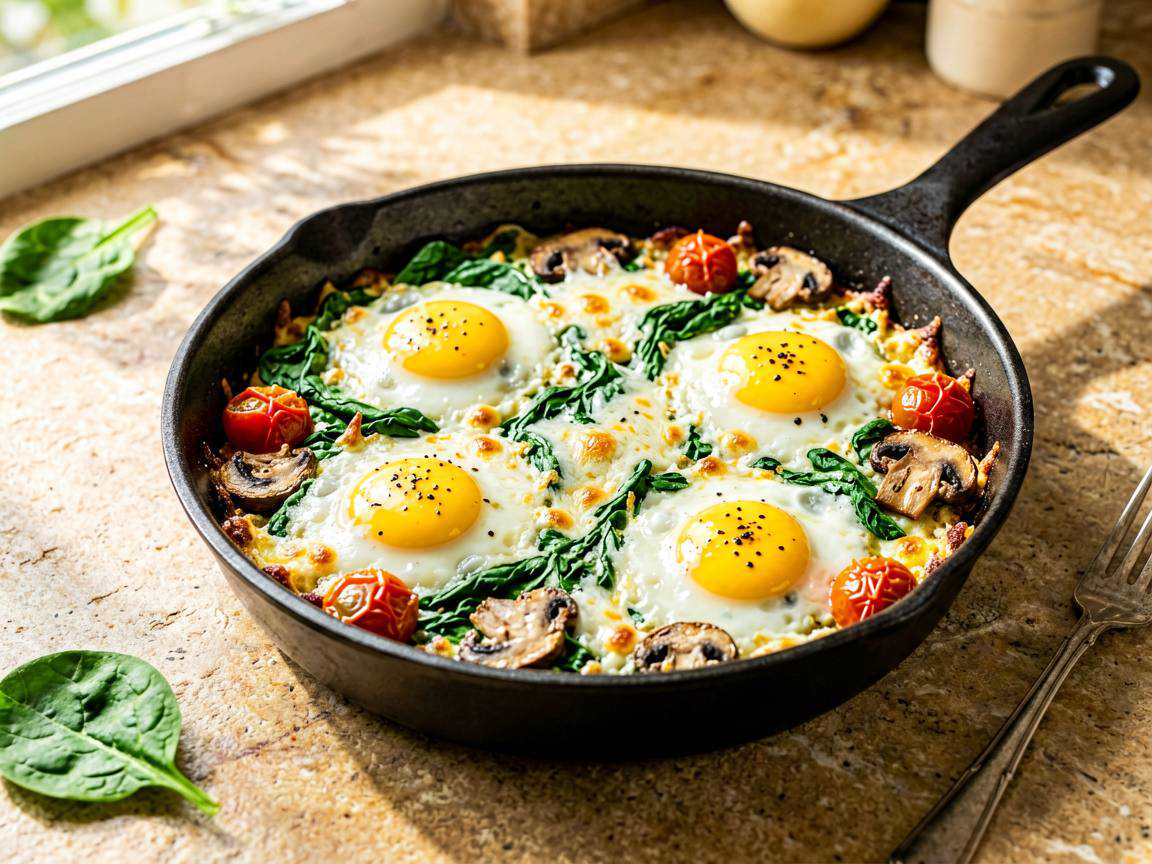
A one-pan egg dish is one of the easiest ways to turn a few dependable ingredients into a complete low-carb meal. This version combines eggs with spinach, mushrooms, tomatoes, and cheese so the pan provides protein, vegetables, and enough flavor to work for breakfast, lunch, or a light dinner. The method is flexible: use a cast-iron skillet for a rustic baked finish, or use any oven-safe sauté pan that holds the vegetables in one even layer.
These low carb one pan eggs recipes are designed for practical home cooking. You will get exact amounts, a clear cooking sequence, simple swaps, storage guidance, and an approximate nutrition estimate. For more ideas organized by ingredients, browse our low-carb recipes by ingredient. If you want more appliance-based methods, the appliance recipe hub has additional options.
Ingredients and equipment
- 2 teaspoons extra-virgin olive oil or avocado oil
- 150 g sliced cremini mushrooms
- 2 packed cups baby spinach
- 120 g cherry tomatoes, halved
- 6 large eggs
- 60 g shredded cheddar, mozzarella, or a mix
- 1 tablespoon chopped parsley or chives
- 1/2 teaspoon garlic powder, 1/2 teaspoon smoked paprika, 1/4 teaspoon black pepper, and salt to taste
- Optional: 30 g crumbled feta, two tablespoons heavy cream, or a pinch of chili flakes
Use a 10-inch oven-safe skillet. If your pan is not oven-safe, transfer the cooked vegetables to a small baking dish before adding the eggs. A lid is useful for a stovetop finish, but the oven gives the cheese and egg whites a more even set.
How to make one-pan keto eggs
- Heat the pan. Heat the oven to 400°F (200°C). Warm the oil in the skillet over medium heat for about 30 seconds. Add the mushrooms and cook for 4 to 5 minutes, stirring twice, until their moisture has cooked off and the edges begin to brown.
- Wilt the greens. Add the spinach, tomatoes, garlic powder, smoked paprika, pepper, and a small pinch of salt. Stir for 1 to 2 minutes, just until the spinach collapses. Keeping the vegetables slightly firm prevents a watery finished dish.
- Add the eggs. Make six small wells in the vegetables. Crack one egg into each well. If you prefer a more custardy center, whisk two tablespoons of heavy cream into the eggs before adding them, but leave the yolks intact if you like a skillet egg format.
- Finish with cheese. Scatter the shredded cheese around the eggs rather than covering every yolk. This helps the whites set while the yolks remain visible. Add feta or chili flakes if using.
- Bake and rest. Place the skillet in the oven for 7 to 10 minutes. The whites should be opaque and firm while the yolks still jiggle slightly. For fully set yolks, bake 11 to 13 minutes. Rest for 2 minutes, then finish with parsley or chives.
Ingredient swaps that still work
For a dairy-free pan, omit the cheese and add two tablespoons of nutritional yeast or a spoonful of olive tapenade after baking. The eggs will still set, but the surface will be less creamy. Kale can replace spinach; remove the tough ribs and cook it for an extra 2 minutes. Zucchini works in place of mushrooms, but salt it lightly and cook until its water has evaporated before adding the eggs. For a stronger flavor, use crumbled goat cheese, feta, or a small amount of grated Parmesan.
If you are cooking for people with different preferences, divide the vegetables into four wells instead of six and add one egg per person. Serve with sliced avocado, a simple cucumber salad, or a spoonful of plain Greek yogurt. These additions keep the meal low in added carbohydrate while changing the texture and portion size.
Storage, reheating, and meal prep
Cool leftovers within two hours and store them in a sealed container in the refrigerator for up to 3 days. The yolks will continue to firm as they chill, so bake the initial pan slightly less than your preferred final texture if you know you will reheat portions. Reheat one serving in the microwave at 50 to 70 percent power in 20-second bursts, or warm it covered in a small skillet over low heat. Avoid high heat, which can make the egg whites rubbery and force water out of the vegetables.
For meal prep, sauté the mushroom and spinach mixture ahead of time and refrigerate it separately for up to 3 days. When ready to eat, warm the vegetables in an oven-safe dish, add the eggs and cheese, and bake fresh. This approach gives better texture than baking a large batch and reheating every portion. If you use frozen spinach, thaw it completely and squeeze it dry before cooking.
Approximate nutrition per serving
Divided into three servings, one portion provides approximately 300 calories, 22 g protein, 21 g fat, 7 g total carbohydrate, and about 2 g fiber, for roughly 5 g net carbohydrate. Values vary with egg size, cheese, oil, and vegetables. Treat this as a planning estimate rather than a laboratory analysis, and adjust the serving size to fit your own nutrition target.
FAQ
Can I make this without an oven?
Yes. Cover the skillet and cook over low heat for 8 to 12 minutes, checking that the whites are set. The covered method is convenient, although the top will be softer and the cheese will not brown as much.
Why did my pan become watery?
Mushrooms, spinach, and tomatoes all release moisture. Cook the vegetables until the pan looks mostly dry before adding the eggs, and thaw and squeeze frozen spinach thoroughly.
Can I use egg whites?
Yes, but the texture will be leaner and less rich. Replace the six eggs with about 360 g liquid egg whites, reduce the baking time, and keep the cheese or add a little cream if you want a softer bite.
How can I make the flavor different?
Try cumin and cilantro for a smoky profile, Italian seasoning with Parmesan, or curry powder with chopped scallions. Keep the vegetables dry and the egg-cooking sequence the same.
This skillet is also a useful base for a broader meal plan. Pair it with the grilled Brussels sprouts recipe in our low-carb vegetable collection, or use the same pan technique with leftover cooked chicken. The key is to control moisture, use an oven-safe pan, and stop baking when the whites are set to your preferred texture.